Home  /  Treatments  /  Tooth wear

Restorative dentistry · Tooth wear

Restoring what the years took off.

Tooth wear is the gradual loss of enamel from grinding, acid or hard brushing, leaving teeth short, flat, chipped or sensitive. At Sardinia House in Holborn we first find what is causing the wear, then rebuild the teeth with composite bonding, veneers or crowns and protect them with a night guard. Simpler cases take two to four visits; extensive wear is planned in stages. Consultation from free.

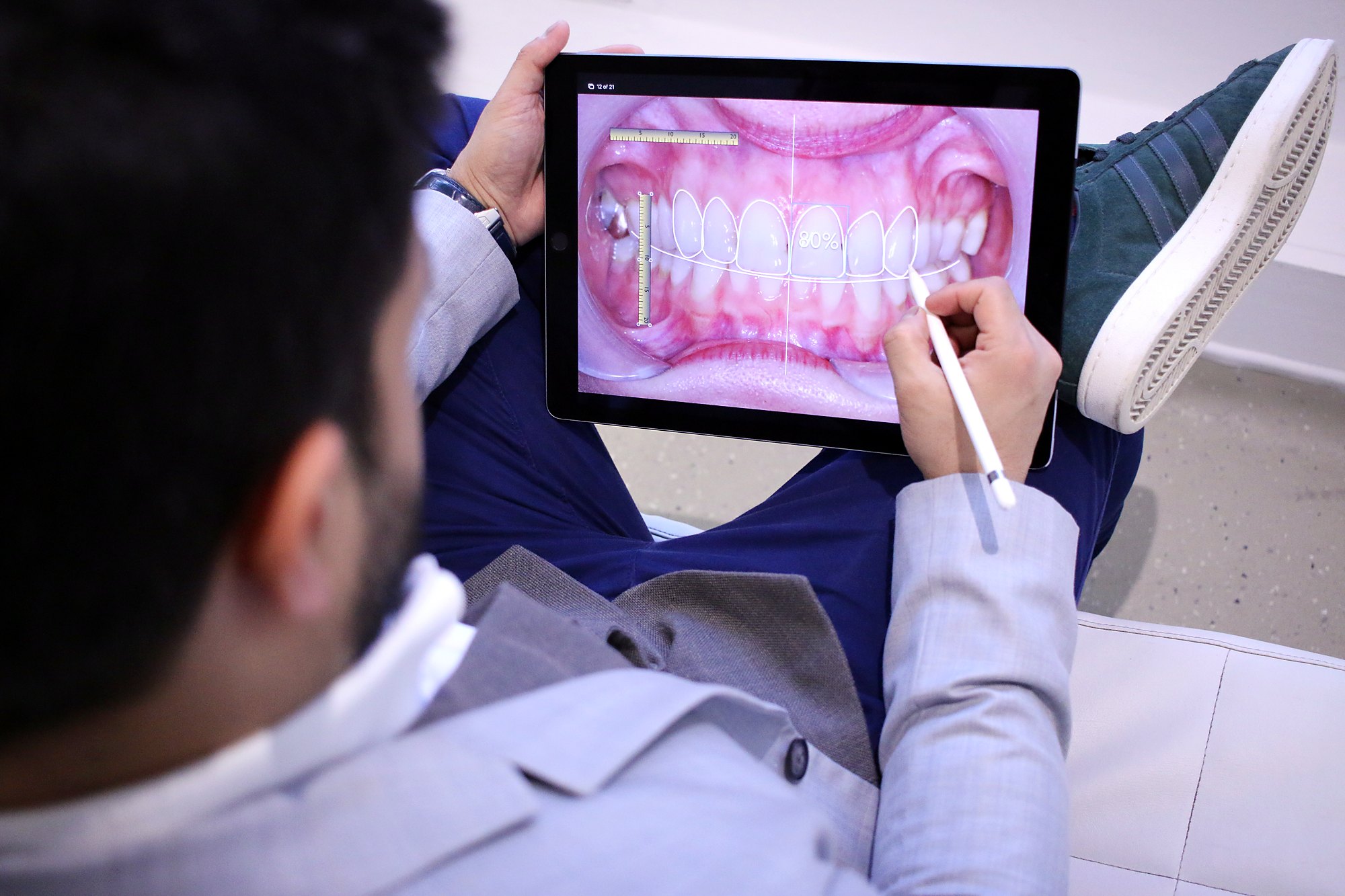
Photographs of teeth reviewed on a tablet

Guide fee

Bonding from £495 per tooth

Visits

Usually 2–4

Wear measured by

Scans compared over time

With

All our dentists

Who it is for

Signs that teeth are wearing

Front teeth that look shorter than they did

Edges that have flattened or thinned, often with a translucent, greyish look, are the most common sign. People notice their smile shows less tooth and more gum, and that photographs from ten years ago look different.

Chips that keep appearing

When enamel has been worn thin, the edges fracture under ordinary use. Repairing each chip as it comes is a losing game; the teeth need their lost height and their protection restored together.

Sensitivity to cold and sweet

Once enamel wears through to the softer dentine beneath, cold drinks and sweet food start to sting. Dentine wears far faster than enamel, so sensitivity is often the point at which wear begins to accelerate.

Grinding, reflux or an acidic diet

Night-time grinding flattens biting surfaces; acid from reflux, fizzy drinks, wine or citrus dissolves enamel into smooth, cupped hollows. Many people have more than one cause, and the pattern on the teeth tells us which.

The difference

What makes the difference

The cause before the cure

Rebuilding worn teeth without stopping the wear simply moves the damage onto the new material. We look at diet, reflux, sleep, stress and the way your teeth meet, and address those alongside the dental work.

Wear measured, not guessed

Because every appointment here starts with an iTero™ or Primescan scan, we can lay this year's scan over last year's and see exactly where and how fast enamel is being lost. That turns a hunch into a measurement.

Adding, rather than drilling

Modern adhesive dentistry lets us bond composite or thin ceramic onto worn teeth with little or no further drilling. Lost height is replaced with new material, rather than borrowed from the little enamel that remains.

More than one clinician on the plan

All our dentists treat tooth wear, and the more extensive cases are discussed at our peer-review sessions, where Dr Amit Patel and Dr Adam White bring their restorative experience to the plan. Where the whole bite needs rebuilding, the plan becomes a full mouth rehabilitation with the same team.

The process

The process, in order

01

Consultation and records

We examine the wear pattern, scan and photograph your teeth and ask about habits, diet and medical history. Models from the scan show how the teeth meet and how much height has been lost.

02

A plan and a preview

The rebuilt teeth are designed digitally and, for front teeth, can be shown on screen or tried as a trial smile. Your written plan sets out the materials, the number of visits and the exact fees.

03

Protecting what is left

If grinding or acid is driving the wear, we deal with that first: a night guard, advice on diet, or a suggestion that you speak to your GP about reflux. This is the step that makes the rest last.

04

Rebuilding

Composite bonding is sculpted directly onto the teeth, usually in one or two visits. Veneers or crowns are scanned, made on site or by a ceramist, and fitted. The bite is adjusted so the new edges share the load evenly.

05

Review and guard

We see you a few weeks later to check comfort and bite, polish the bonding and fit or adjust your night guard. From then on, your regular check-ups compare the scans for any new wear.

Afterwards

Aftercare

Rebuilt edges need a little respect in the first weeks: avoid biting nails, pens or ice, and cut rather than tear hard food. Wear your night guard every night if we have made you one; it is what protects the new teeth most. Composite can be polished and repaired at check-ups, and your scans are compared each year to confirm the wear has stopped.

Guide fees

Smile design consultationfrom free
Composite bonded veneer, per toothfrom £495
Porcelain, Emax or zirconia veneer, per toothfrom £1,250
Emax or zirconia crownfrom £1,250
Balanced hard night guard£895

Guide fees. Nothing is started until your plan, with every fee written down, is in your hands. See all fees

Good to know

The questions we are asked most

How much does tooth wear treatment cost in London?+

It depends on how many teeth are worn and what they need. Composite bonding is from £495 per tooth, porcelain veneers from £1,250 and crowns from £1,250, with a balanced hard night guard at £895. Your written plan gives the exact figure before treatment begins, and finance is available subject to status.

Does the treatment hurt?+

Composite bonding onto worn edges usually needs no drilling and often no anaesthetic at all. Where veneers or crowns are planned, the teeth are numbed with local anaesthetic. Sensitivity from exposed dentine usually improves once the teeth are covered.

Can enamel grow back?+

No. Enamel has no living cells and cannot repair itself, which is why finding the cause matters so much. What has been lost can be replaced with bonding or ceramic, and what remains can be protected from further loss.

How long does bonding last on worn teeth?+

With a night guard worn as advised and regular check-ups, composite on worn teeth can be expected to last several years before it needs refreshing. It can be polished and repaired in the chair, which is one reason we often suggest it as the first step.

Do I really need a night guard?+

If grinding is part of the cause, yes. A guard made from your scan spreads the forces of grinding across a hard surface instead of your new edges, and it is the difference between work that lasts and work that needs redoing. If acid is the sole cause, diet and reflux matter more than a guard.

Will my teeth look too long or false?+

The new length is designed on screen against your face and lip line, and for front teeth you can see it before anything is bonded. Most people are restoring teeth to the length they used to be, rather than to anything new, so the result tends to look familiar.

How do I know whether my teeth are wearing?+

Sensitivity, chips, flattened edges or a smile that seems to show less tooth are all signs. At Sardinia House in Holborn the scan taken at every check-up is compared with the last, so wear is picked up early and measured rather than noticed late.

Related treatments

Book an appointment

Known by name, from your first visit to your last.

Book online at any time, or call and speak to someone who will remember you.

Call or WhatsApp020 7404 8600
Emailinfo@sardiniadental.com
OpenMon–Thu from 8am, late on Wednesdays, Fri from 8.30am
Nearest stationHolborn, around 5 min
Part ofDental Group