Does root canal treatment hurt?+
The treatment itself should not. The tooth is fully numbed and, because the inflamed nerve is being removed, the source of the pain goes with it. Afterwards the tooth can be tender to bite on for a few days, and this settles with ordinary painkillers.
How long does it take?+
Allow one to two hours per visit, depending on the tooth and the number of canals. Many teeth are finished in one visit. A tooth with a large infection may be dressed and completed at a second appointment a few weeks later.
How much does root canal treatment cost in London?+
Our guide fee is from £1,200; difficult cases start at £1,250 and surgical cases at £1,300. The £150 consultation includes imaging. A crown afterwards is quoted separately, and everything is confirmed in writing beforehand.
Why not simply take the tooth out?+
A root-treated tooth keeps the bone around it and your bite as it was. Taking the tooth out is faster on the day, but an implant or bridge to fill the gap tends to cost more and take longer overall. Where the tooth is worth saving, saving it is usually the better route.
Will I need a crown afterwards?+
For most back teeth, yes. A root-treated molar has lost structure and becomes more likely to fracture. A crown protects it, and here it can be made and fitted the same day. Front teeth can often be restored with a filling.
How successful is root canal treatment?+
Root canal treatment can be expected to succeed in most cases when it is done thoroughly and the tooth is sealed promptly. Outcomes vary with the condition of the tooth and the extent of infection, which is why we examine and image carefully before quoting.
Can a failed root canal be re-treated?+
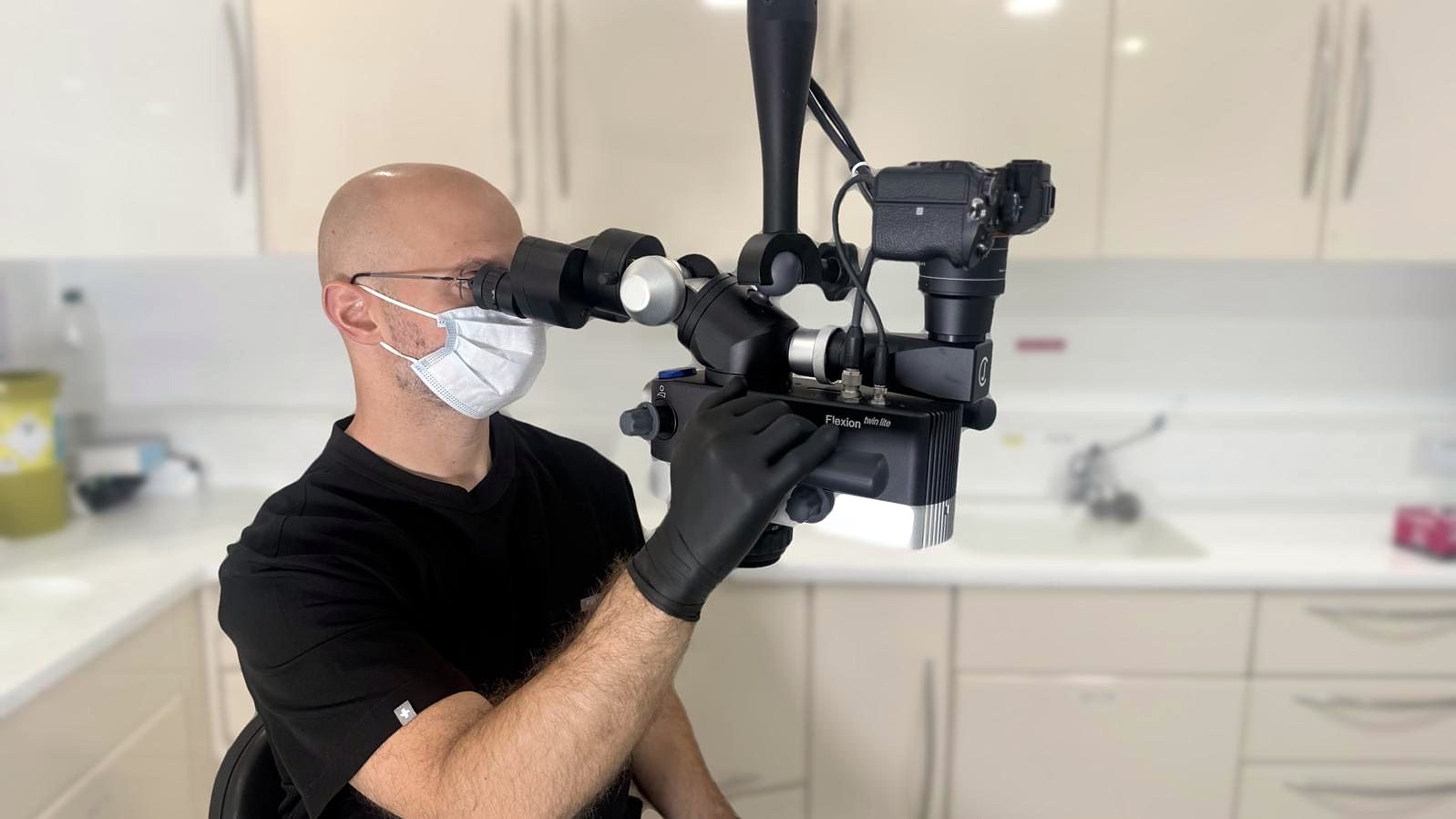
Often, yes. Under the microscope the old filling is removed, missed canals are found and the tooth is cleaned again. Where re-treatment through the crown is not possible, a small surgical procedure at the root tip is an alternative.
Can root canal treatment be done in one visit?+
Often, yes. Dr Spencer Richman completes most root canals in a single appointment under the microscope, and sometimes two visits are needed where an infection should settle first. Because we mill crowns on site, the tooth can be root-filled and crowned on the same day when the case allows.
Is a root-filled tooth dead, and is it bad for my health?+
A root-filled tooth has no nerve, but it is not dead in any useful sense: it is still anchored in the bone, still works for chewing and is usually protected with a crown. A well-sealed root filling removes the source of infection, and there is no good evidence that a sound root-filled tooth harms your general health.