Home  /  Treatments  /  Cracked teeth

Advanced dentistry · Diagnosis

Finding the crack you cannot see.

A cracked tooth causes a sharp pain on biting or on release, sensitivity to cold and, often, nothing to see on an X-ray. At Sardinia House in Holborn we find the crack with the operating microscope, dye and a CBCT scan where needed, then repair it with bonding, a crown or root canal treatment depending on its depth. Diagnosis usually takes one visit. Consultation £150.

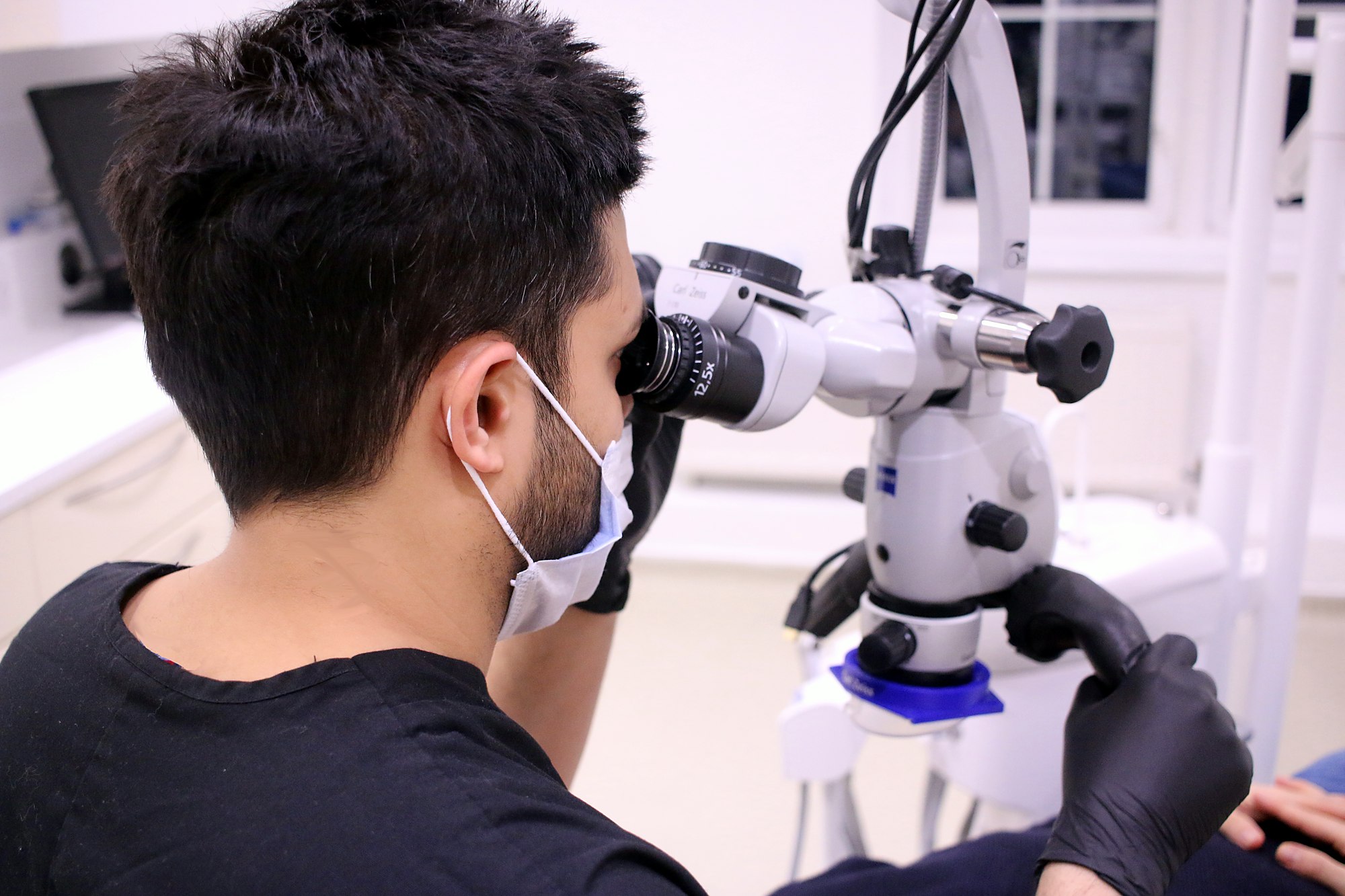
Dr Amit Patel at the Zeiss operating microscope

Consultation

£150, including imaging

Visits

One to diagnose; repair often the same day

Repair

From a bonded filling to a same-day crown

With

All our dentists; microscope assessment with Dr Spencer Richman

Who it is for

Signs of a cracked tooth

Pain when you bite, or let go

The classic sign is a sharp pain on biting something firm, or as you release, that disappears as quickly as it came. It is often hard to say which tooth it is, which is why it so often goes undiagnosed.

Sensitivity to cold that lingers

A crack lets cold reach the inner layers of the tooth. A twinge from ice cream that has started recently in a tooth with a large filling is worth investigating before it becomes an ache.

A heavily filled back tooth

Molars with large old amalgam fillings are the teeth most likely to crack, as the remaining walls are thin and the metal expands and contracts. Grinding and clenching add to the load on them.

A tooth that has already lost a piece

When a corner of a tooth breaks away, sometimes while eating something unremarkable, a crack has usually been developing for some time. What remains needs checking for further crack lines before it is rebuilt.

The difference

What makes the difference

Magnification

Under the Zeiss or CJ-Optik microscope a crack line that is invisible to the eye shows clearly, and we can follow where it runs. Whether it stops at the enamel or reaches the root changes the treatment entirely.

Testing one tooth at a time

Biting on a small instrument tooth by tooth, cold testing and a dye that settles into the crack identify which tooth is responsible. Guessing, and treating the wrong tooth, is exactly what we are trying to avoid.

A 3D scan when the picture is unclear

Cracks rarely show on a flat X-ray. A CBCT scan can reveal bone loss alongside a root or a split that has reached below the gum, which tells us whether the tooth can be kept at all.

A microscope, and a dentist who sees these every week

Any of our dentists can assess and repair a cracked tooth. If the crack runs deep or the nerve may be affected, Dr Spencer Richman, our endodontist, looks at the tooth under the microscope and tells you whether a crown, root canal treatment, or the two together is the right course.

The process

From symptoms to repair

01

Tell us the story

When it hurts, what sets it off and how long it lasts tells us a great deal. We listen first, then examine, because the pattern of pain narrows the search before any instrument is picked up.

02

Test and look

Each suspect tooth is bite-tested and cold-tested, then examined under the microscope, with dye if needed. Digital X-rays and, where helpful, a CBCT scan complete the picture before anything is decided.

03

Decide what the crack needs

A shallow crack can be sealed and bonded. A crack through a cusp needs a crown to hold the tooth together. A crack that has reached the nerve needs root canal treatment as well, and one that has split the root means the tooth cannot be saved.

04

Repair, often the same day

Because the CEREC mill is on site, a tooth that needs a crown can be prepared, scanned and crowned the same afternoon. A root canal and crown can also be completed in one day when the tooth allows it.

Afterwards

Aftercare

After a crown or bonding, the tooth may be sensitive for a few days and should settle. Avoid very hard foods on that side for a week or so. If you grind, a night guard protects the repair and the teeth around it, and we will suggest one where it is needed. Tell us promptly if biting pain returns, as a crack can occasionally progress.

Guide fees

Consultation, including imaging£150
Bonded composite filling, smallfrom £399
Same-day CEREC crownfrom £1,250
Root canal treatment, if the nerve is involvedfrom £1,200

Guide fees. Nothing is started until your plan, with every fee written down, is in your hands. See all fees

Good to know

The questions we are asked most

Why does my tooth hurt when I bite?+

Pain on biting that comes and goes sharply is most often a crack. As you bite, the two sides of the crack flex apart and irritate the nerve; as you release, they spring back. Other causes include a high filling or an abscess, which is why we test rather than assume.

Can a cracked tooth be saved?+

Usually, if it is caught early. If the crack stays within the visible part of the tooth, it can be sealed, or the tooth crowned. Once a crack has extended down the root and split it, the tooth generally has to be removed, which is why pain on biting should not be ignored.

Will it show on an X-ray?+

Rarely. A flat X-ray only shows a crack when it runs in exactly the right direction. The microscope, bite tests and dye are more reliable, and a CBCT scan can show the bone changes that a deep crack causes.

How much does it cost to treat a cracked tooth in Holborn?+

The consultation at Sardinia House is £150 and includes imaging. The repair depends on what we find: a bonded filling from £399, a same-day crown from £1,250, or root canal treatment from £1,200 if the nerve is involved. Everything is quoted in writing first.

Does the treatment hurt?+

The diagnosis involves biting on a small instrument and cold tests, which can reproduce the pain briefly so that we can identify the tooth. Repairs are made once the tooth is numb; you may notice pressure, but not pain.

Will I need a root canal?+

Only if the crack has reached the nerve, or the nerve has become inflamed beyond recovery. Many cracked teeth can be crowned without it. We assess the nerve before deciding, and we tell you if there is a chance it may be needed later.

How do I stop my teeth cracking?+

Replace large old fillings before they fail, avoid chewing ice and hard sweets, and wear a night guard if you grind. Regular check-ups with a scan let us watch teeth that are at risk and act before they break.

Related treatments

Book an appointment

Known by name, from your first visit to your last.

Book online at any time, or call and speak to someone who will remember you.

Call or WhatsApp020 7404 8600
Emailinfo@sardiniadental.com
OpenMon–Thu from 8am, late on Wednesdays, Fri from 8.30am
Nearest stationHolborn, around 5 min
Part ofDental Group