Home  /  Treatments  /  Periodontics & gum grafts

Restorative and complex care · Periodontics

Gums that hold on to your teeth.

Periodontics is the treatment of the gum and bone that hold your teeth in place. At Sardinia House in Holborn, gum disease that has gone beyond what a hygiene visit can manage, receding gums that need grafting, and the gum work around implants and cosmetic cases are seen by Dr Bryar Koyi, our visiting specialist periodontist, working with your own dentist and hygiene therapist. Periodontal consultation £150; treatment from £450 per quadrant.

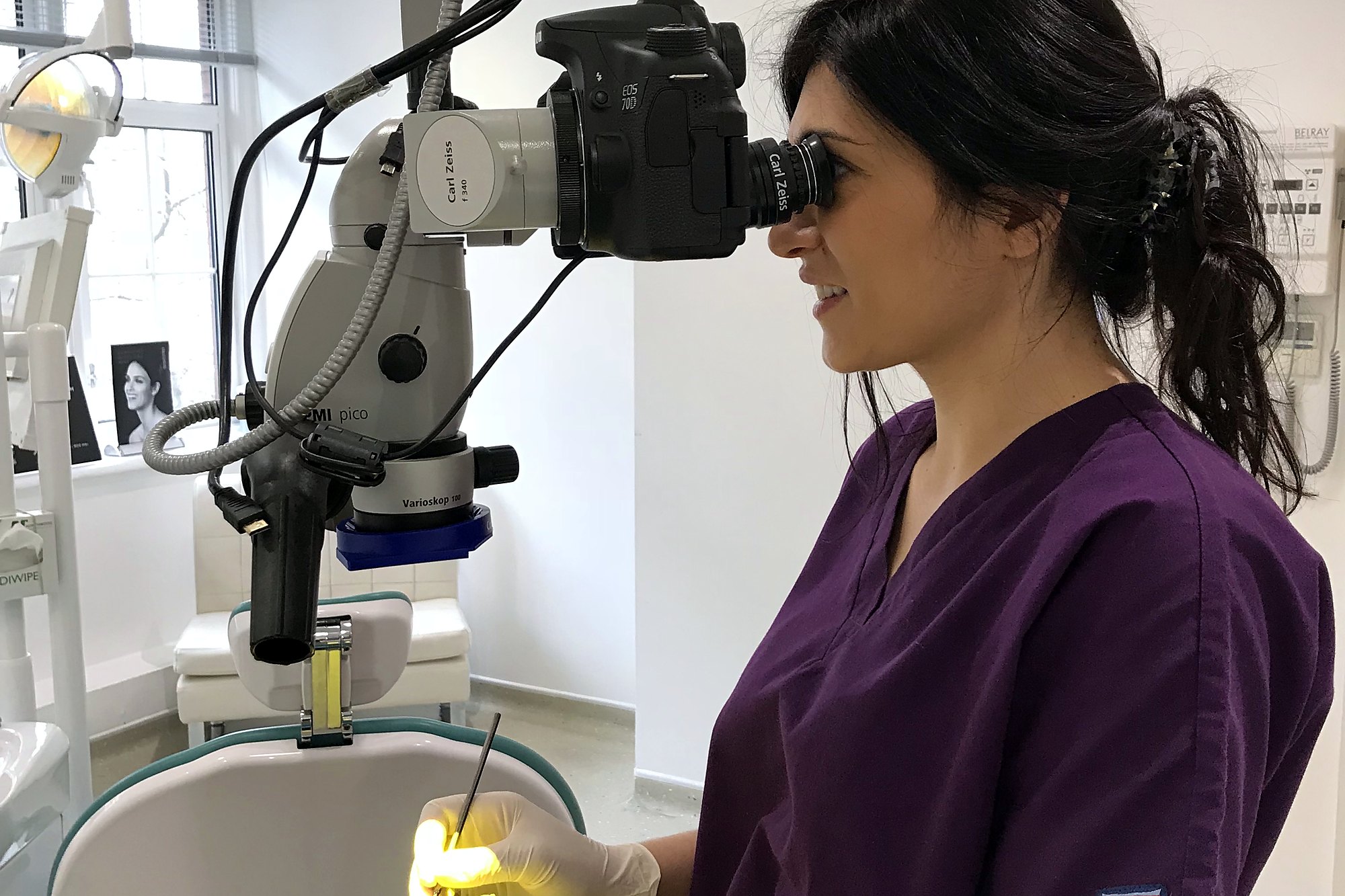
A clinician working under the operating microscope

Guide fee

Consultation £150; treatment from £450 per quadrant

Visits

Consultation, then as planned

Time

Deep cleaning over 1–2 visits; grafts heal over 2–3 months

With

Dr Bryar Koyi, specialist periodontist

Who it is for

When a periodontist is the right person

Gum disease that keeps coming back

Deep pockets, bleeding that persists after good hygiene care, or bone loss on an X-ray mean the disease has reached the point where a specialist-level approach is needed: thorough treatment under local anaesthetic, sometimes with surgery to reach the deepest areas.

Receding gums and exposed roots

Gums that have pulled back leave roots exposed, sensitive and vulnerable to wear. A gum graft covers the root with your own tissue or a donor material, protects the tooth and restores the gum line.

A gum line that spoils a smile

Before veneers or bonding, an uneven or heavy gum line can be reshaped so the teeth look the right length. Crown lengthening also uncovers enough tooth to crown one that has broken near the gum.

Gums around implants

Implants need healthy gum as much as teeth do. Inflammation around an implant, or a lack of firm gum tissue, is treated early to protect the bone that holds it.

The difference

What makes the difference

Measured first

Every pocket around every tooth is charted and recorded, with X-rays or a CBCT scan where needed, so treatment is planned against numbers and progress can be measured at review rather than guessed.

Working with your own team

Bryar plans with the dentist who knows your mouth and the hygiene therapist who will maintain it. Periodontal treatment only lasts with maintenance, so that handover is built into the plan from the start.

Surgery when it earns its place

Most gum disease responds to meticulous non-surgical treatment. Surgery and grafting are reserved for the sites that need them, and explained with the scan and photographs on screen before anything is agreed.

Teeth kept, not written off

Much of periodontal work is about keeping teeth that would otherwise be lost. Where a tooth cannot be saved, the periodontal plan prepares the ground for an implant or bridge with the rest of the team.

The process

From consultation to healthy gums

01

Periodontal consultation

A full examination with pocket charting, X-rays and photographs, and a frank discussion of what can be kept, what is at risk and what it will take. A written plan follows.

02

Treat the disease

Deep cleaning of the roots under local anaesthetic, usually over one or two visits, with your hygiene therapist continuing the care between appointments.

03

Reassess

Around eight to twelve weeks later the pockets are measured again. Sites that have healed are maintained; sites that have not are considered for surgery.

04

Surgery or grafting, where needed

Pocket surgery, regeneration of lost bone or a gum graft, carried out under local anaesthetic, with sedation available for anyone who would rather not be aware of it. Healing takes a few weeks; the result is reviewed at three months.

05

Maintain

Supportive periodontal care with the hygiene team every three to four months at first, because this is the part that keeps the result.

Afterwards

Aftercare

After deep cleaning expect some tenderness and sensitivity to cold for a few days; the gums may shrink slightly as they heal, which is a sign of success rather than a problem. After a graft, leave the area alone: no brushing at the site for the period you are given, soft food, and the mouthwash prescribed. Keep every maintenance visit; periodontal disease is controlled, not cured, and the hygiene appointments are the control.

Guide fees

Periodontal consultation£150
Periodontal treatment, per quadrantfrom £450
Pocket chartingfrom £100
Deep scaling with your dentistfrom £150
Gum graft or crown lengtheningquoted after consultation
Supportive periodontal care (hygiene therapist)from £175

Guide fees. Nothing is started until your plan, with every fee written down, is in your hands. See all fees

Who provides it

Periodontal treatment at Sardinia House is provided by our visiting specialist periodontist

Good to know

The questions we are asked most

What is the difference between a hygienist and a periodontist?+

Our hygiene therapists treat and prevent gum disease at every visit and manage most cases well. A specialist periodontist is a dentist on the General Dental Council specialist list, with years of further training in gum and bone, for disease that has gone deeper, for surgery and grafting, and for the gum work around implants and cosmetic cases. The two work together on your plan.

How much does gum treatment cost in London?+

At Sardinia House a periodontal consultation is £150 and treatment is from £450 per quadrant of the mouth. Gum grafts and crown lengthening are quoted after the consultation, because the fee depends on how many sites are involved. Your written plan sets it out.

Does a gum graft hurt?+

It is done under local anaesthetic, so you should feel nothing during the procedure. The site is sore for a few days afterwards, much like a scrape, and most people manage with ordinary painkillers. Sedation is available if you would rather not be aware of the treatment.

Can receding gums grow back?+

Not on their own. Once the gum has receded it stays receded, which is why grafting exists: it rebuilds the lost tissue with your own gum or a donor material. Catching recession early gives the simplest and most predictable result.

Is gum disease linked to general health?+

There is good evidence that gum disease is associated with diabetes, heart disease and other conditions, and that treating it helps control blood sugar. Healthy gums are part of a healthy body, which is one reason we take them seriously at every check-up.

How often will I need to come back?+

After active treatment, supportive care with the hygiene team every three to four months is usual at first, stretching out as things stabilise. The interval is set by your measurements, not a calendar.

Related treatments

Book an appointment

Known by name, from your first visit to your last.

Book online at any time, or call and speak to someone who will remember you.

Call or WhatsApp020 7404 8600
Emailinfo@sardiniadental.com
OpenMon–Thu from 8am, late on Wednesdays, Fri from 8.30am
Nearest stationHolborn, around 5 min
Part ofDental Group